Loading...
Serving San Jacinto, CA and surrounding areas. (951) 474-5006
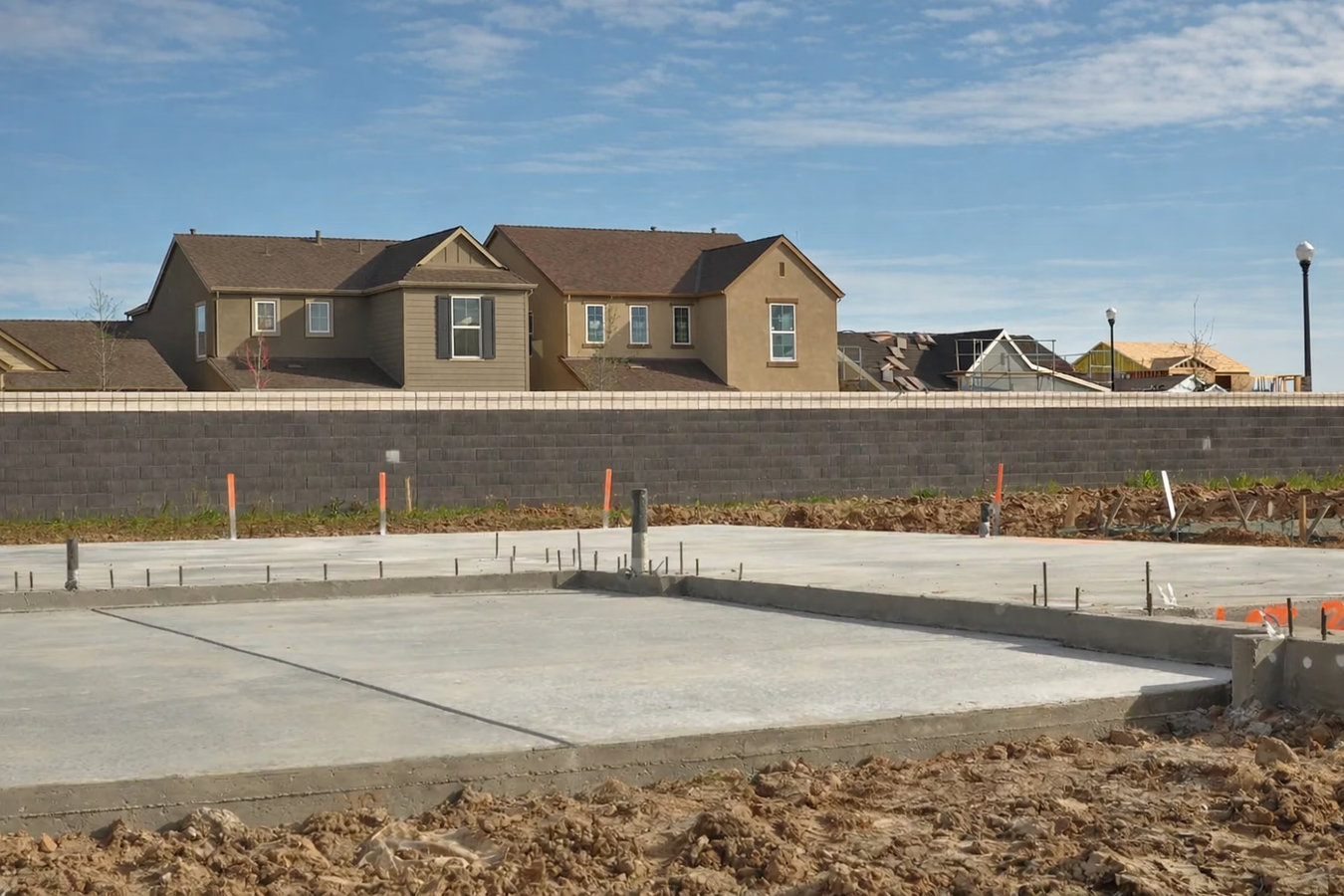
Clay soils, summer heat, and seismic activity make San Jacinto demanding on foundations. We build slabs designed for these conditions - properly permitted, inspected, and built to hold.
Slab foundation building in San Jacinto involves grading the lot, compacting the soil, laying a gravel base and moisture barrier, placing steel reinforcement, and pouring a single thick concrete slab - most residential foundations take one to three days of active work, followed by a curing period before framing begins.
If you are building a new home, an accessory dwelling unit, or a large addition in San Jacinto, the slab foundation is the first thing that has to be right. Get it wrong and you will spend years dealing with cracked walls, sticking doors, and uneven floors. The clay-heavy soils in this valley move with every wet season and every dry summer - a slab that was not designed for that movement will show it within a few years. Many of our customers also need concrete footings as part of the same project, which we handle together to keep your timeline clean.
We give you a written, itemized estimate after visiting your property. We pull the permit, schedule the city inspection, and walk you through every stage before it happens.
The most straightforward sign is that you have a construction project planned and no foundation exists yet. Whether it is a new home, a granny flat, or a large room addition, a slab foundation is almost certainly part of the plan in San Jacinto. Without it, framing cannot begin and the city will not issue a building permit.
Small hairline cracks in a concrete slab are common and usually harmless. But if you can fit a pencil into a crack, or if cracks run diagonally from the corners of doorways, the slab has moved significantly - possibly due to the expansive clay soils in the San Jacinto Valley. A structural assessment can determine whether repair or replacement is the right answer.
When a slab shifts, the walls and door frames above it shift too. If doors that used to close easily now stick, or if you can see gaps around window frames that used to seal tightly, the foundation beneath may have moved. In San Jacinto, this symptom often appears after a wet winter followed by a dry summer - the clay soil swells and then contracts, rocking the slab.
If you place a marble on your floor and it rolls toward one wall, or if you feel a noticeable slope when walking through a room, the slab beneath may have settled unevenly. Sometimes a section of slab can be stabilized, but in more serious cases a new slab is the more cost-effective long-term fix.
We build new residential slab foundations for homes, ADUs, garages, and room additions throughout the San Jacinto area. Every slab includes soil compaction, a gravel base, a polyethylene moisture barrier, and steel reinforcement placed to meet California seismic requirements. For customers adding living space, we often combine slab work with our foundation installation service, which covers the full scope of new foundation work including raised and hybrid systems. We also integrate concrete footings into every slab design - those thickened edge beams are what actually carry the weight of your walls into the ground, and skimping on them is one of the most common shortcuts that leads to early cracking.
We handle the permit application with the City of San Jacinto Building Division, coordinate the required pre-pour inspection, and schedule the final foundation sign-off. You do not need to visit the permit office or track down an inspector on your own. The Portland Cement Association publishes detailed guidance on slab-on-ground construction standards that inform how we approach every pour.
For new homes, ADUs, and granny flats on bare lots - includes full site prep, steel, moisture barrier, and embedded plumbing rough-in coordination.
For attached or detached garages where a durable, level floor is needed - includes proper drainage slope and thickened edges for door header loads.
Matches the height and finish of your existing floor to avoid trip hazards and achieve a seamless transition between old and new spaces.
Meets City of San Jacinto ADU habitability requirements, including the slab thickness, insulation, and moisture management standards the city requires.
The San Jacinto Valley sits in a basin with significant clay content in the soil. Clay expands when wet and contracts when dry - and in a climate with hot, dry summers and occasional wet winters, that movement is real and recurring. A foundation designed for a more stable soil environment will not hold up the same way here. We account for local soil behavior on every project: deeper footings on borderline lots, extra compaction steps where the ground is soft, and slab thickness specifications based on what the ground actually does. The city also sits close to the San Jacinto Fault Zone, one of the most seismically active fault systems in California, so steel placement and anchor bolt layout are designed with earthquake forces in mind on every pour. The California Geological Survey maps these hazard zones and the local building code reflects them.
We work throughout the valley and nearby communities. Homeowners in Hemet and Beaumont face similar clay-soil and heat challenges, and we apply the same site-specific approach to every job in those areas too.
We visit your property to assess the lot, soil, and access before giving you any number. You receive a written, itemized estimate - not a verbal ballpark - within 1 business day of the site visit.
We submit the permit application to the City of San Jacinto Building Division on your behalf. Plan review typically takes one to two weeks. No work begins until the permit is posted at the site.
The crew grades and compacts the soil, lays the gravel base and moisture barrier, and places all the steel reinforcement. A city inspector then visits to check the steel before any concrete goes in - this step cannot be skipped.
Concrete is poured, finished, and then actively cured to protect against San Jacinto's heat. Light traffic is possible after 24 to 48 hours. Framing typically waits at least seven days. The city conducts a final inspection before the permit is closed out.
We visit your lot, assess the soil conditions, and give you an itemized quote before any work begins. No pressure, no obligation.
(951) 474-5006We account for the San Jacinto Valley's expansive soils on every foundation we build - not just the ones where the soil looks obviously bad. That means footing depth, slab thickness, and steel layout are all sized for the ground conditions on your specific lot.
We handle the permit application with San Jacinto Building and Safety from start to finish, and we schedule every required inspection ourselves. You receive the closed-out permit documentation when the job is done - proof the work was done right.
We schedule all summer pours for early morning and use curing compounds and coverings to prevent surface drying in San Jacinto's triple-digit heat. Concrete that cures too fast is weaker - this is not optional for us. The American Concrete Institute sets the standards for hot-weather concreting that we follow on every pour.
We have built foundations for homeowners throughout San Jacinto - from properties near the MSJC campus to newer subdivisions on the east side of town. That local experience means we already know what the city building division requires and how the soil behaves in different parts of the valley.
A foundation is the one part of your home that is almost impossible to fix after the fact. We take the preparation and inspection steps seriously because cutting them is what causes problems that last for decades.
Full foundation installation for new homes and additions, covering slab, raised, and hybrid systems with complete permit handling.
Learn moreStandalone footing work for walls, posts, and structures that need a concrete base without a full slab.
Learn moreContractor schedules fill fast in spring - call now to lock in your start date and get a written estimate before costs go up.