
Loading...
Serving San Jacinto, CA and surrounding areas. (951) 474-5006
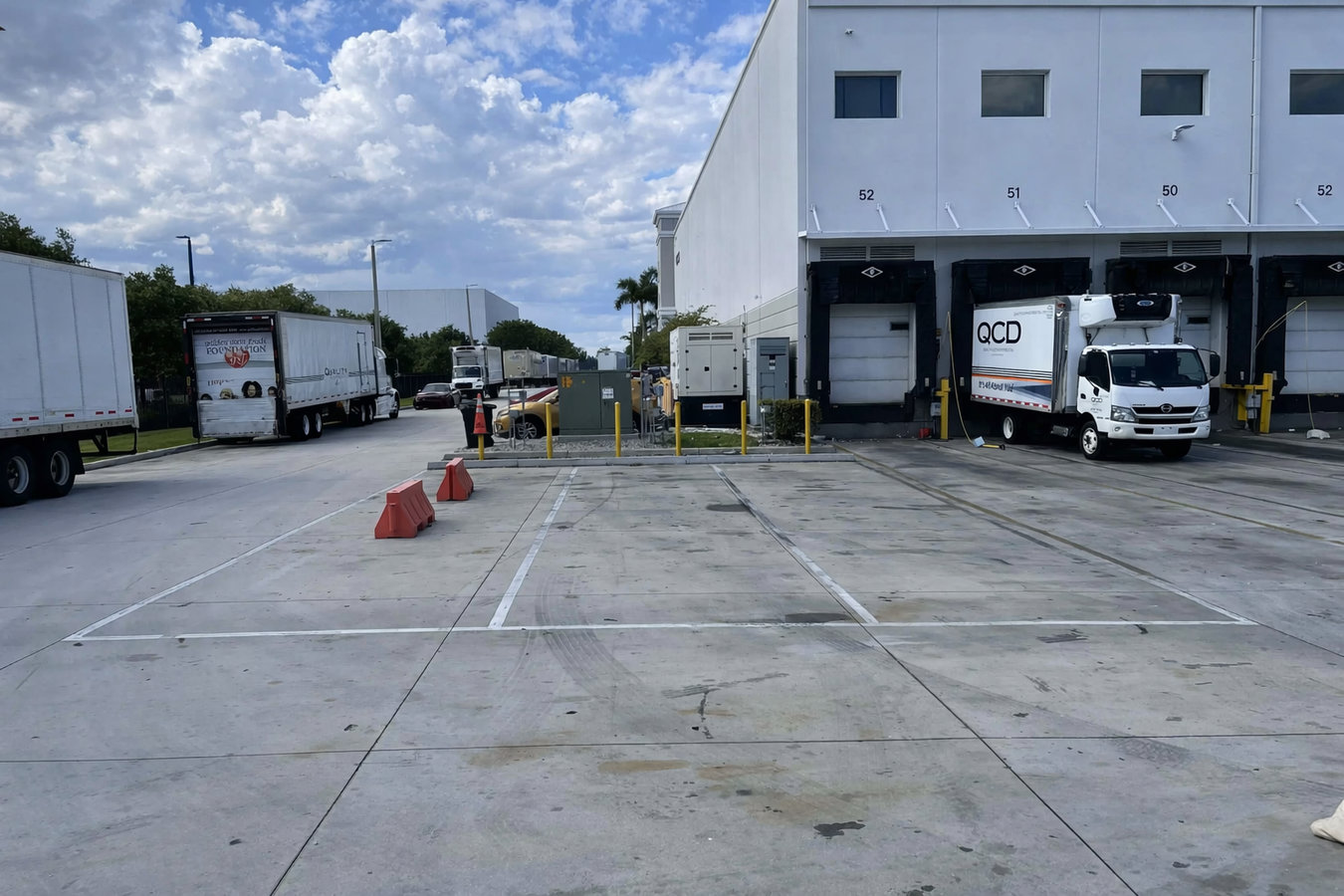
Dirt and crumbling asphalt do not hold up in Inland Empire heat. Get a properly drained concrete lot that stays solid through San Jacinto summers and handles real vehicle traffic.
Concrete parking lot building in San Jacinto involves removing the existing surface, grading the ground for proper drainage, and pouring a reinforced slab - most residential and small commercial lots take three to seven days of active work, with a seven-day curing period before vehicles can use the surface.
This is not just pouring concrete on top of whatever is already there. The preparation work underneath - soil compaction, gravel base, drainage slope - determines how long the surface lasts. In the San Jacinto Valley, where clay soils shift with the seasons, that base work is especially important. Many homeowners pair a new parking lot with a concrete driveway for a complete, continuous surface from the street to the garage.
A well-built concrete lot can serve you for 25 to 50 years with minimal maintenance - far longer than asphalt in this climate, and without the annual resealing asphalt requires in triple-digit summer heat.
If cracks are wider than a quarter-inch or chunks of the surface are lifting or crumbling, patching is no longer a practical solution. At that point, the underlying base has likely failed. In San Jacinto, soil movement and heat cycles accelerate this kind of damage faster than in cooler, more stable-soil areas.
Standing water on a parking surface means the drainage slope has failed or was never built correctly. In San Jacinto, where heavy monsoon-season rain can arrive suddenly in late summer, pooling water accelerates surface damage and creates slip hazards. If puddles sit more than a few minutes after rain stops, the surface needs evaluation.
If your car bottoms out or the surface has visible rises and dips, the base beneath has shifted. Expansive soils in the San Jacinto Valley swell and shrink with moisture changes, pushing the surface unevenly over time. This is a sign the base needs to be rebuilt, not just patched.
Asphalt surfaces in San Jacinto take a beating from summer heat - they soften, rut under parked vehicles, and develop an oily residue that tracks into buildings. If your asphalt lot feels soft underfoot on a hot day or has tire impressions baked into it, replacing it with concrete is the long-term fix.
We handle everything from demolition of existing surfaces to final permit inspection. That means hauling away old asphalt or concrete, grading the ground for the correct drainage slope, compacting a stable base, setting edge forms, and pouring the slab with control joints spaced to guide any future cracking into planned lines rather than random breaks. If your lot will see heavy vehicles - delivery trucks or RVs - we design the slab thickness accordingly. We also offer concrete footings for adjacent structures like carports or storage buildings that need a proper foundation alongside the lot.
For homeowners who want a finished surface beyond plain gray concrete, we can connect your parking lot work with our concrete driveway building service for a continuous approach-and-park solution that looks intentional rather than piecemeal. Every project is permitted and inspected through the City of San Jacinto before vehicles ever touch the finished slab.
Suits homeowners replacing a dirt, gravel, or failed surface with a permanent concrete lot.
Ideal for property owners tired of annual asphalt maintenance in San Jacinto's extreme summer heat.
Right for businesses needing a durable, low-maintenance surface that handles regular vehicle traffic.
Suits homeowners adding parking capacity alongside an existing concrete driveway or pad.
San Jacinto sits in the San Jacinto Valley in Riverside County, where summer temperatures regularly exceed 100 degrees Fahrenheit and the ground underneath most properties is clay-heavy soil that expands and contracts with the seasons. That combination is hard on concrete surfaces that were not built with it in mind. We schedule pours for early morning during hot months, use mix additives to slow drying, and keep the surface moist during the curing period - none of which is optional in this climate. The San Jacinto Fault Zone also runs through this region, so we account for seismic ground movement when designing control joint placement and base depth.
We serve homeowners across the valley, including properties in Hemet and Perris. San Jacinto also falls under Riverside County stormwater management rules, which govern how new paved surfaces handle runoff - we design the drainage slope of every lot to meet those requirements from the start, not as an afterthought.
Tell us the size of the area, what is currently on it, and how vehicles currently access it. We respond within 1 business day to schedule a free on-site visit - no obligation at that stage.
We visit the property, check the soil, assess drainage, and measure the area. You get a written estimate that covers demolition, base prep, the pour, and permit fees. No guessing on cost.
We apply for the required City of San Jacinto permit before any work begins. Permit approval typically takes one to two weeks. We keep you updated on the timeline so you can arrange alternative parking.
Old surface is removed, base is graded and compacted, forms are set, concrete is poured with control joints, and the slab cures for at least 7 days. City inspection closes out the permit before you park on it.
We respond within 1 business day. There is no obligation - just an honest conversation about your project and a written estimate before any work begins. After you submit, someone from our office will call to schedule a free on-site visit.
(951) 474-5006We compact the soil and install a gravel base on every parking lot project before a single yard of concrete is poured. In San Jacinto, where clay soils shift with moisture, skipping this step is the primary reason lots crack within a few years. We do not skip it regardless of project size. The Portland Cement Association outlines why subgrade preparation is the foundation of a long-lasting lot.
Every lot we build includes a slight slope - typically 1 to 2 percent - designed to move rainwater away from your garage or building and toward drains or the property edge. San Jacinto gets most of its rain in intense bursts during monsoon season, and a lot without proper drainage turns those bursts into pooling and surface damage. We design the drainage from the first stake, not as a correction after the pour.
We apply for the required permit from San Jacinto Building and Safety before breaking ground on every project. The permit triggers an inspection that confirms the work meets local grading, drainage, and impervious surface rules. You get a paper trail that protects your home's value and insurance coverage. Contractors who suggest skipping the permit are saving themselves paperwork at your expense.
San Jacinto regularly sees June through September temperatures above 100 degrees Fahrenheit - conditions that can weaken a slab poured without the right precautions. We schedule pours for early morning, use mix additives that slow surface drying, and keep the slab moist for several days after the pour. This is standard procedure for us here, not something you have to ask for.
Every parking lot we build in San Jacinto is permitted, inspected, and designed for the local soil and climate - not built to a generic spec that ignores what the ground here actually does. That is the difference between a lot that lasts 30 years and one that needs attention in five.
If you need a carport or storage structure alongside your new lot, we build the footings that hold it in place - including all seismic reinforcement required in San Jacinto.
Learn moreConnect your new lot to a matching concrete driveway for a continuous surface that goes from the street all the way to your garage.
Learn moreSummer is the busiest season for concrete work in the Inland Empire - the sooner you reach out, the sooner we can get your project scheduled and your property off dirt or failing asphalt for good.